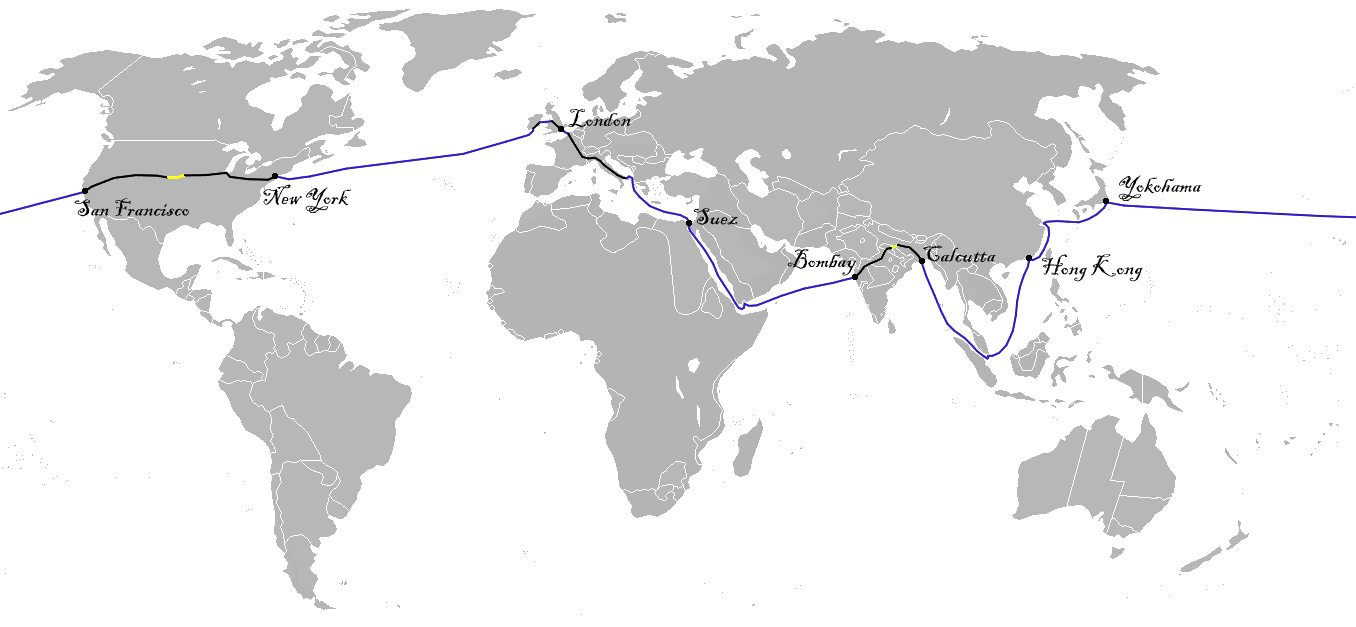
“Phileas Fogg had won his wager, and had made his journey around the world in eighty days. What had he really gained by all this trouble? What had he brought back from this long and weary journey? Nothing, say you? Perhaps so, nothing but a charming woman, who, strange as it may appear, made him the happiest of men.”(Verne 245).
I did not really like the last chapter of the novel, because the story suddenly ended without any clarifications and solutions. When detective Fix found out that the actual robber was caught three days ago, Fogg is released from prison, and he suddenly finds out that he had actually made it back to England in time. I felt that the ending came too sudden, following Fogg and Aouda’s decision to get married the next day. Furthermore, I felt that the ending was unclear, because the International Date Line explanation was did not really make sense. Because the author forgot to take account of the first time the characters crossed the Pacific, it seemed unclear as to how long the journey had actually taken place. I am expecting that the author was trying to end the novel with a happy ending, and that is why he decided to end the story so suddenly by making Fogg win the bet.
I did not really like the last chapter of the novel, because the story suddenly ended without any clarifications and solutions. When detective Fix found out that the actual robber was caught three days ago, Fogg is released from prison, and he suddenly finds out that he had actually made it back to England in time. I felt that the ending came too sudden, following Fogg and Aouda’s decision to get married the next day. Furthermore, I felt that the ending was unclear, because the International Date Line explanation was did not really make sense. Because the author forgot to take account of the first time the characters crossed the Pacific, it seemed unclear as to how long the journey had actually taken place. I am expecting that the author was trying to end the novel with a happy ending, and that is why he decided to end the story so suddenly by making Fogg win the bet.

